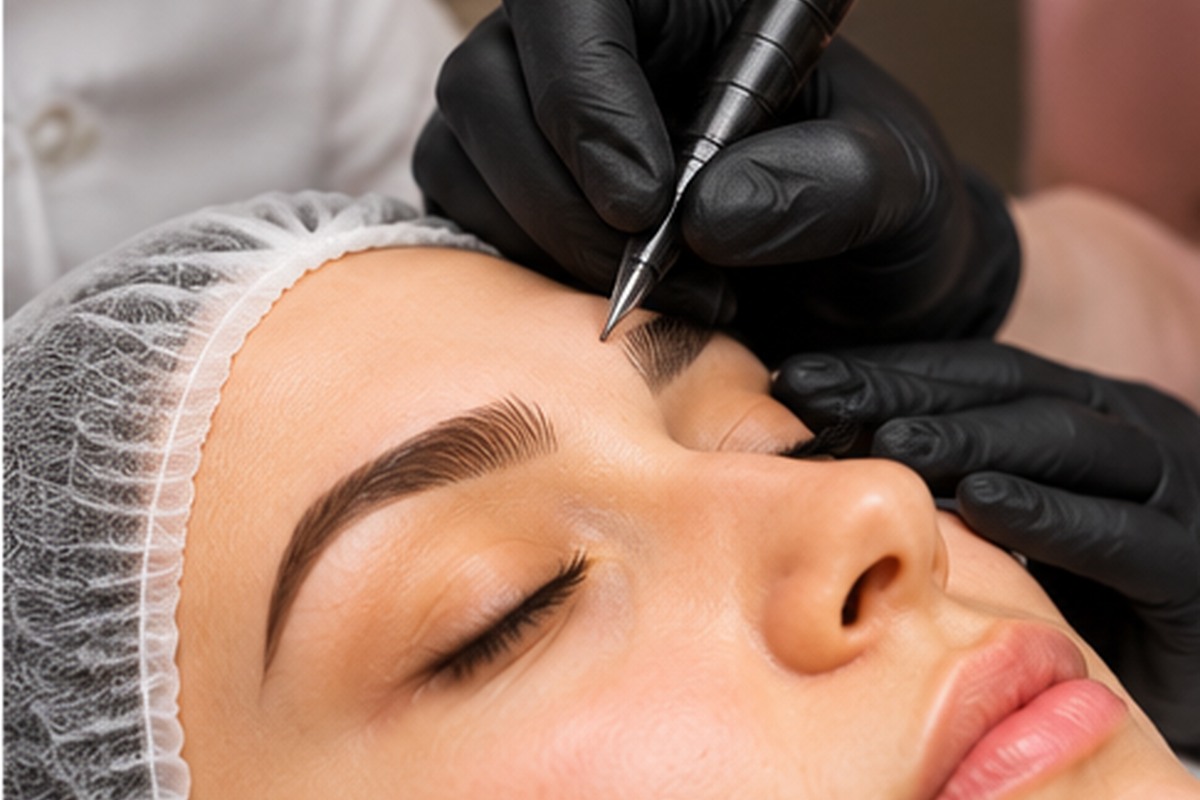
The most expensive permanent makeup mistake is not necessarily paying too much. It is paying for a shape, color, or level of definition you never truly wanted, then discovering that changing it is complicated.
A disappointing result can affect your confidence every morning. However, fear is not a useful way to choose an artist. Evidence is: the person’s credentials, healed work, consultation process, hygiene practices, and willingness to explain limitations.
Use the first conversation to find out how the artist makes decisions. A polished social profile may attract your attention, but a thoughtful consultation should earn your trust before any pigment reaches your skin.
Verify the person who will perform your treatment
Ask for the full name of your proposed artist and the professional license relevant to the procedure. In Virginia, permanent cosmetic tattooing has its own licensing requirements; a general beauty qualification should not be treated as proof of authorization for every cosmetic procedure.
Check the individual and business through the appropriate Virginia licensing resources. Ask about experience with the exact treatment you are considering, including correction work if you already have pigment.
A certificate displayed online can describe training, but it does not answer every question about current authorization or practical experience. You should be able to connect the artist’s name, portfolio, and booking confirmation without uncertainty about who will actually treat you.
Ask for healed photographs with context
Fresh brows can look exceptionally crisp. You need to know what the same work looks like after healing and, ideally, after more time has passed.
Ask whether a photograph shows the initial appointment, a healed result, or a result after additional treatment. Look for consistent lighting and unfiltered skin detail. Several examples are more informative than one exceptional transformation.
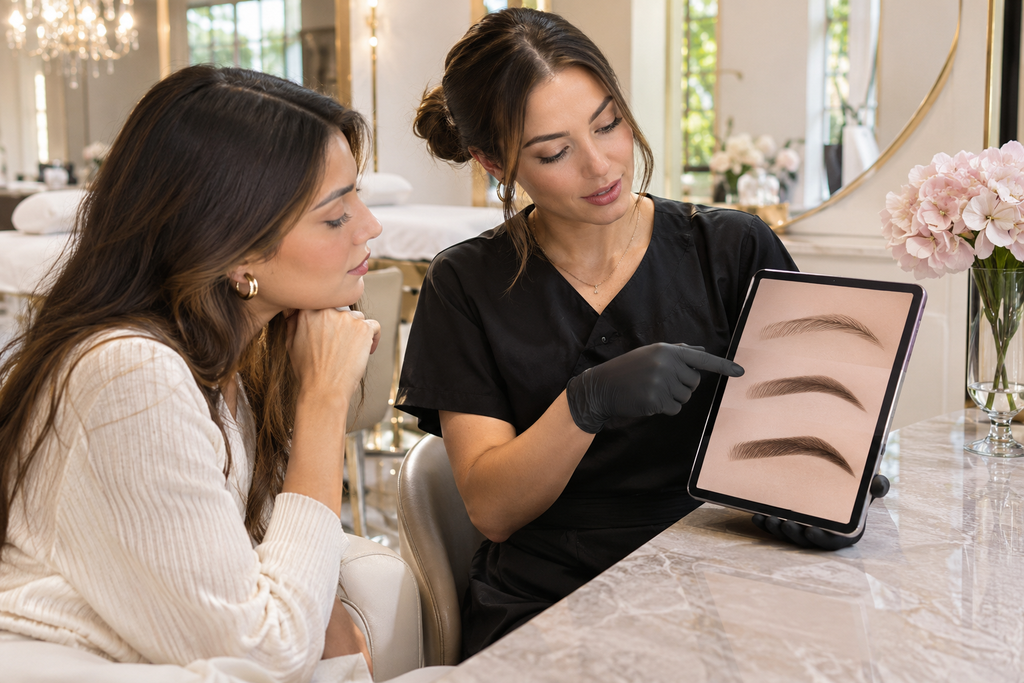
Choose comparisons that resemble your starting point. Sparse brows, strong natural brows, and previously tattooed brows pose different design questions. If the portfolio mostly shows one fashionable style, ask how the artist would adapt it to your preferred finish.
A consultation should leave room for disagreement
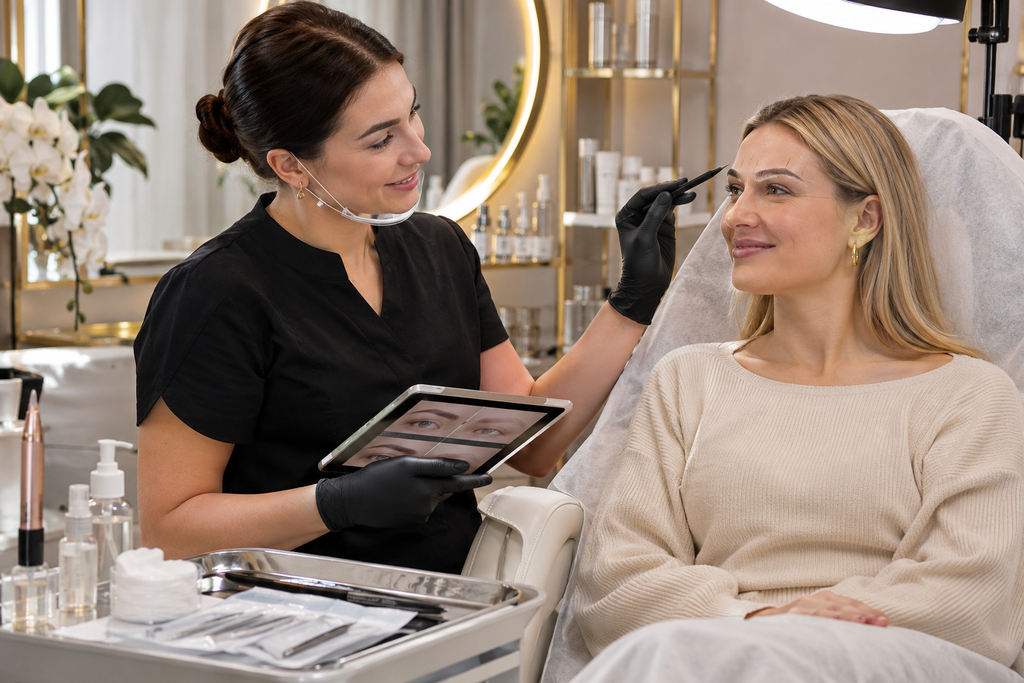
You should feel comfortable saying that an arch looks too high, a tail too long, or a proposed color too strong. A professional conversation allows time to discuss those concerns before treatment.
Bring photographs of both looks you like and looks you want to avoid. Explain whether you wear full makeup daily or prefer an almost bare face. Ask how the design will work with your natural brow growth instead of concentrating only on a drawn outline.
Read Permanent Makeup in 2026: Everything You Were Afraid to Ask (But Absolutely Need to Know Before Booking) before your consultation, and write down the decisions you still need help making. You do not need to arrive already knowing the technique you should buy.
Pay attention to the health questions
An artist should ask about relevant medical history, allergies, medication, previous procedures, and problems with healing. Answer accurately, including anything you think might delay treatment.
A recommendation to postpone can be a sign of sound judgment. Virginia rules prohibit tattooing unhealthy skin surfaces such as areas with rashes or infections. If a medical condition raises questions about suitability, your clinician should help resolve them.
Be cautious if someone declares you an ideal candidate before discussing your history or examining the area. An appointment should begin with deciding whether treatment is appropriate, not with assuming that every inquiry must become a sale.
Hygiene should be explained in concrete terms
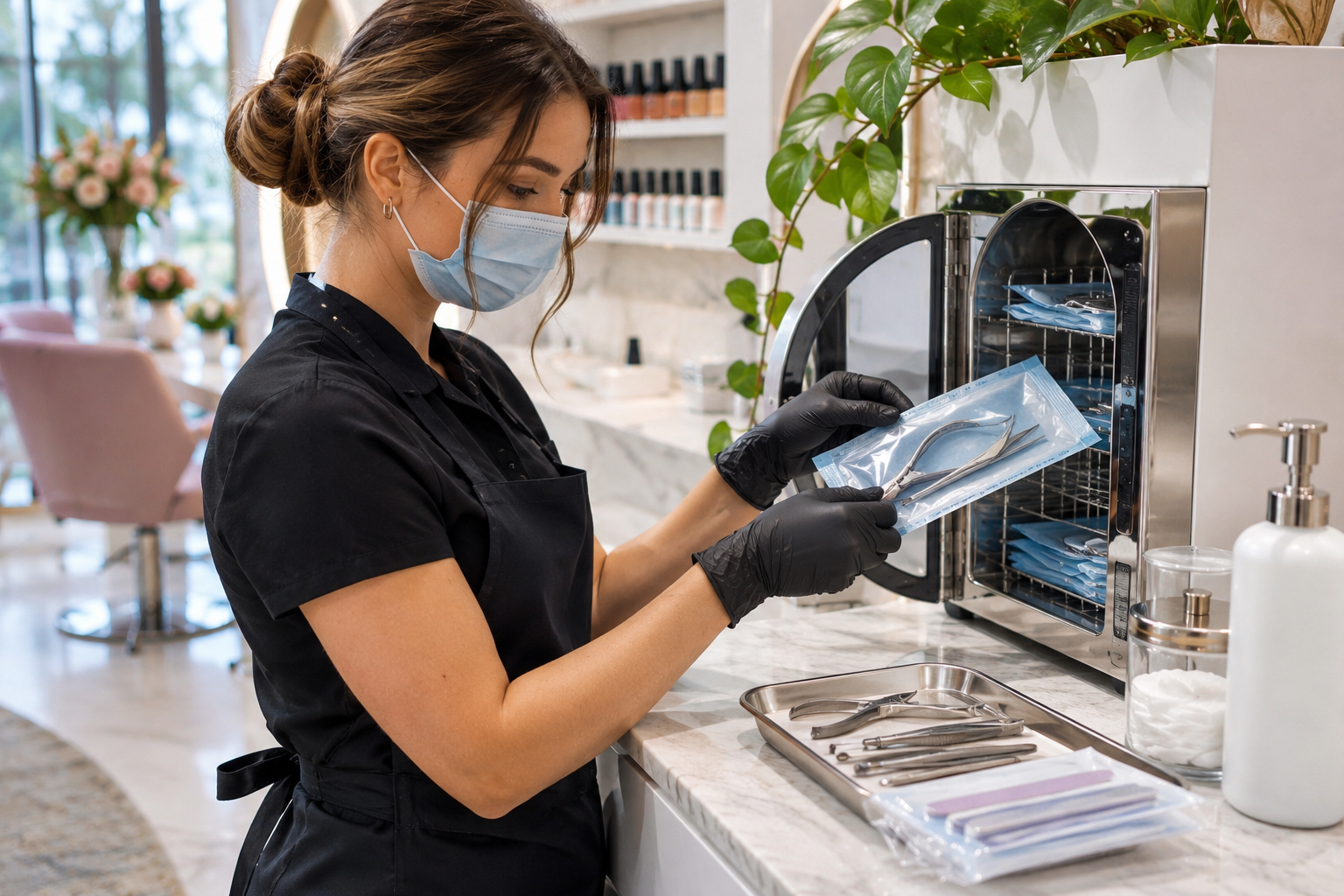
Ask how single-use needles or blades are handled, how the treatment area is prepared, and how clean items are protected from contamination. You are looking for a clear process rather than a vague assurance that everything is “medical grade.”
Ask which pigment products will be used and whether their identifying information is recorded. The FDA has reported infections associated with contaminated inks, including contamination in sealed containers; a new bottle alone cannot establish that a product is risk-free.
These questions do not eliminate all risk. They help you assess whether the provider takes traceability and infection prevention seriously and can explain what would happen if a concern arose.
Be wary of guarantees that ignore uncertainty
“Completely painless,” “no possible reaction,” and “gone entirely in a year” should prompt more questions. Cosmetic tattooing involves a long-term change, and responsible explanations include limitations.
Permanent makeup can involve infection, allergic reactions, and scarring. The FDA also warns that removing an unwanted tattoo may be difficult. A provider should discuss these possibilities without dismissing them or using them to frighten you into a quick decision.
You can also ask what the artist would do if your healed result differed from the agreed goal. A clear review process is more useful than a blanket promise that every client is always delighted.
Correction Experience Matters When Pigment Already Exists
Disclose old brow work even if it looks faint. Bring any available treatment records and photographs. Ask whether the proposed appointment is a refresh, a correction, or an assessment before possible removal.
Covering an unwanted result with more pigment is not automatically the right answer. A clinical chart review of cosmetic tattoo removal describes differing pigment responses, reinforcing the value of individual assessment when plans change.
Do not accept a rushed correction simply because you feel embarrassed about the previous result. Ask for the reasoning, alternatives, likely stages, and total estimated cost. A second opinion can be worthwhile when the proposed change is substantial.
Read Reviews For How Problems Are Handled
Five-star totals tell you less than detailed accounts of communication. Look for comments about whether consultations felt rushed, whether the design was discussed, and whether the provider responded helpfully after the appointment.
Reviews are personal accounts rather than clinical proof, so consider them alongside licensing and healed work. Avoid treating either a glowing testimonial or a single angry post as a complete assessment.
Our published article on how Alexandre de Paris salon specialists support confidence introduces the salon’s broader approach to beauty services. Bring your own questions to the consultation so the proposed treatment is grounded in your preferences.
Choose clarity before committing
When contacting Alexandre de Paris Beauty Salon & Spa, request a consultation for your specific brow goal and ask who would carry out the procedure. Review the permanent makeup service options beforehand so you can discuss the differences in plain language.
Confirm the current quote, follow-up arrangements, written aftercare, and time available to approve the design. If something remains unclear, take the information home before booking treatment. A good decision should feel considered, with enough detail to understand both the result you want and the commitment you are making.