
Skin And Body Treatment
Chemical Peel vs. Microdermabrasion vs. HydraFacial: Which Skin Facial Gets You Real Results?
Jun
Three treatment names. All positioned as the gold standard of professional skincare. All used interchangeably in conversations where they have no business being compared. If you have been trying to choose between a chemical peel, microdermabrasion, and a HydraFacial and every website you’ve visited has somehow made the decision less clear and therefore this guide is written for you. As a deep expansion of our flagship pillar What Healthy Skin Really Looks Like And the Facial Treatments Most Women Don’t Know They Need, this article breaks down exactly what each treatment does, who it is designed for, and what you should realistically expect from each; so you stop guessing and start choosing with confidence.
The Core Problem With How These Treatments Are Marketed
The skincare industry has a tendency to present every treatment as universally transformative. The reality is that each of these three procedures operates through a fundamentally different mechanism, targets a different layer of skin, and is appropriate for a different set of concerns. Choosing the wrong one does not just mean limited results; it can mean unnecessary downtime, avoidable irritation, or money spent on a treatment your skin simply did not need.
Chemical Peels: What They Actually Do to Your Skin
A chemical peel applies a controlled acid solution typically glycolic acid (AHA), salicylic acid (BHA), lactic acid, or trichloroacetic acid (TCA) depending on the depth desired to dissolve the bonds between dead skin cells and the surface layer of living tissue beneath. This controlled exfoliation triggers the skin’s wound-healing response, accelerating cellular turnover and stimulating collagen production in the dermis.
Light peels (superficial) address dullness, mild uneven texture, and minor pigmentation. Medium peels go deeper, addressing more significant sun damage, acne scarring, and deeper hyperpigmentation. Deep peels are performed in clinical environments only. The key limitation: recovery time. Even a light peel can involve 3 to 5 days of visible flaking, redness, and sensitivity. Medium peels extend that to 7 to 14 days.
Chemical peels are best for: sun damage and age spots, post-acne hyperpigmentation, chronically dull or uneven skin tone, fine lines in the superficial dermis, and texture irregularities from congested pores. To see how a chemical peel compares in context with other Fairfax skin treatments, our blog How to Achieve Radiant Skin From Top Facial Treatments in Fairfax covers the full menu of professional facial options and how practitioners at Alexandre de Paris match treatment to skin type.
Microdermabrasion: Mechanical Exfoliation, Zero Downtime
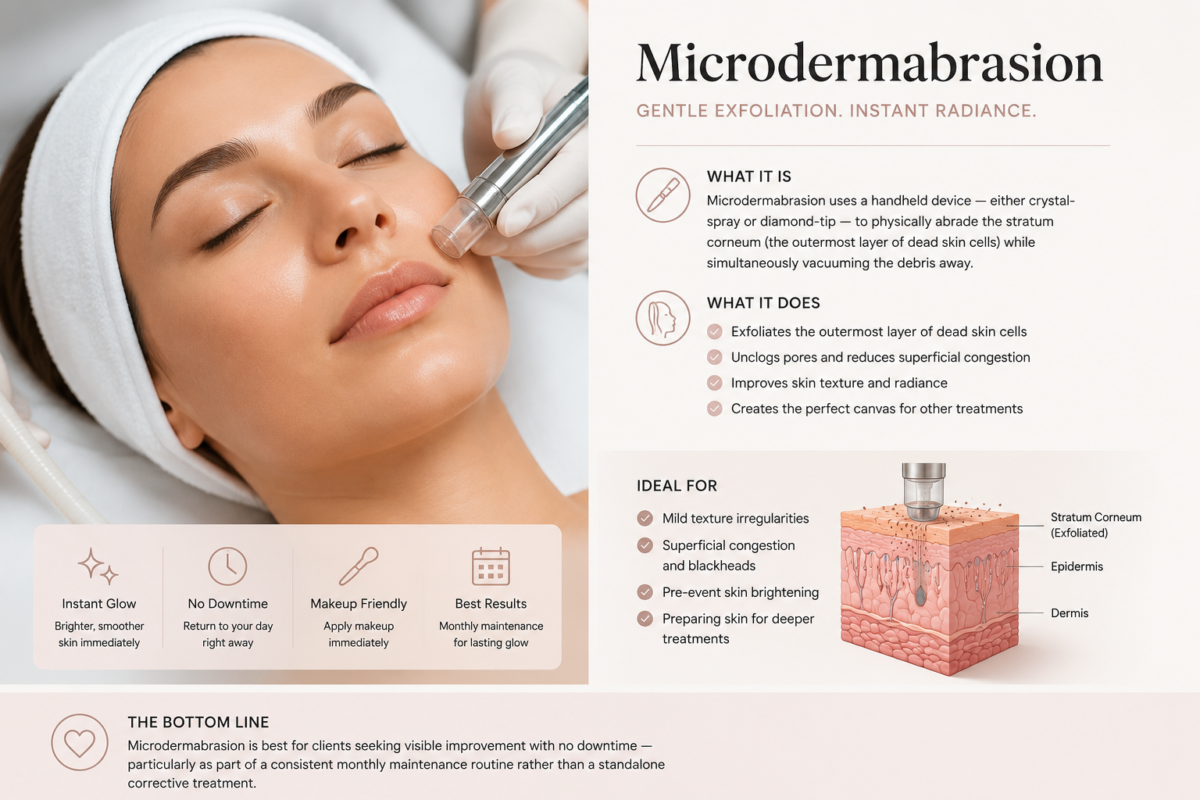
Microdermabrasion uses a handheld device, either crystal-spray or diamond-tip to physically abrade the stratum corneum (the outermost layer of dead skin cells) while simultaneously vacuuming the debris away. There is no acid, no wound-healing response, and no meaningful downtime. Skin may appear slightly pink for a few hours post-treatment, but most clients return to normal activity, including makeup application, immediately.
The limitation of microdermabrasion is equally significant: it only addresses the outermost epidermal layer. It cannot correct deeper pigmentation, trigger meaningful collagen remodelling, or address concerns rooted below the surface. It is excellent for: mild texture irregularities, superficial congestion and blackheads, pre-event skin brightening, and as a preparatory step before other treatments that penetrate more deeply.
Microdermabrasion is best for clients seeking visible improvement with no downtime, particularly as part of a consistent monthly maintenance routine rather than a standalone corrective treatment.
HydraFacial: When Hydration and Exfoliation Work Simultaneously
HydraFacial uses a multi-step device system to cleanse, exfoliate, extract, and infuse the skin with concentrated serums in a single session. The proprietary vortex-fusion technology opens pores for deep extraction while simultaneously delivering hyaluronic acid, antioxidants, and peptides directly into the skin. Unlike chemical peels or microdermabrasion, HydraFacial does not target a specific concern through chemical or mechanical disruption — it optimises the skin’s baseline health with each treatment.
HydraFacial is universally tolerated, including by clients with sensitive skin, rosacea, or reactive conditions that make peels or mechanical exfoliation contraindicated. It is one of the only professional facial treatments appropriate for virtually all skin types without modification. Results are immediate — clients typically leave with noticeably brighter, more hydrated skin — but HydraFacial’s greatest power is cumulative. A series of monthly treatments delivers compounding improvements in texture, tone, and hydration levels over time. Explore our Skin and Body Treatments service page to see the full range of facial options available at Alexandre de Paris, including HydraFacial, and how they are priced and structured.
Side-by-Side: Choosing the Right Treatment for Your Skin Concern
If your main concern is sun damage, persistent hyperpigmentation, or noticeable skin texture caused by acne scars and you’re comfortable with some downtime a medium chemical peel offers the most dramatic corrective results in a single treatment.
If you’re looking for visible skin improvement without interrupting your daily routine, microdermabrasion is an excellent choice for mild skin concerns, while HydraFacial provides comprehensive skin rejuvenation with no downtime.
For those who are new to professional facial treatments, have sensitive or reactive skin, or simply want to build and maintain a healthy skincare routine, HydraFacial is the ideal place to start.
The Combination Approach: When More Than One Treatment Makes Sense
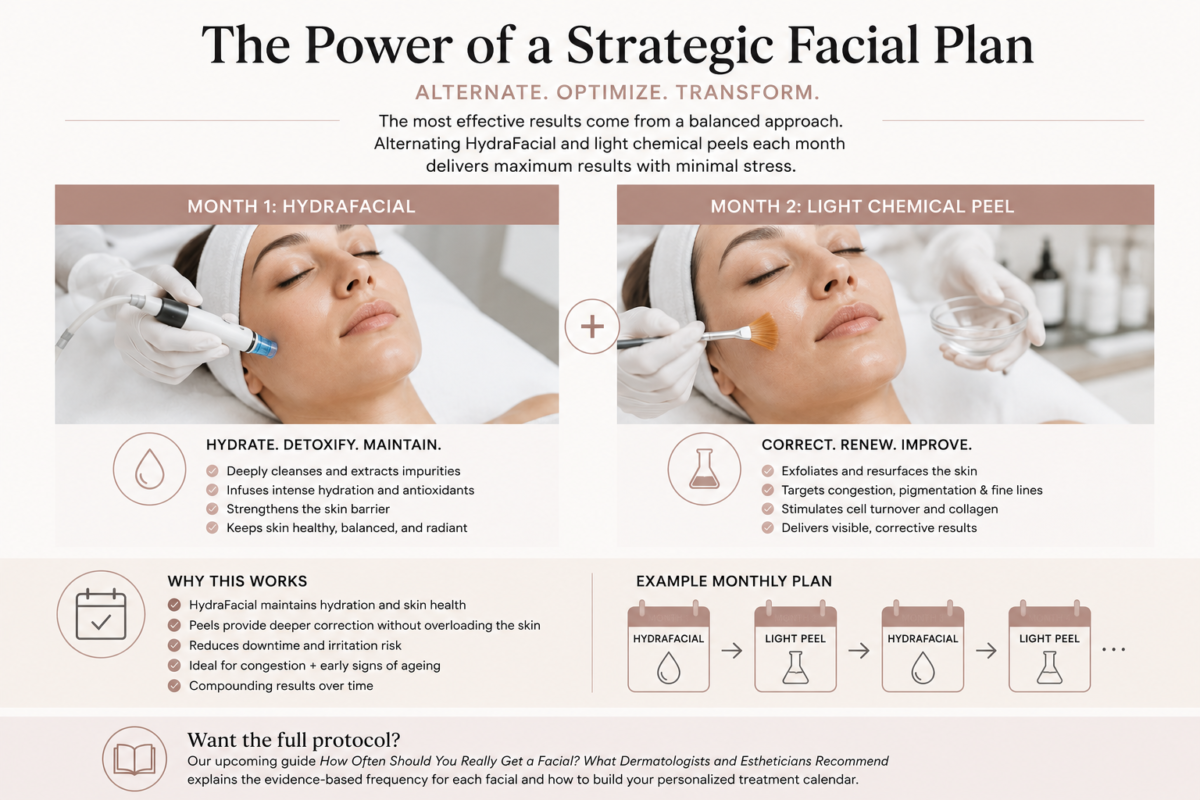
Experienced estheticians rarely prescribe a single treatment in isolation. A common, highly effective protocol is alternating HydraFacial and light chemical peels on a monthly basis — with HydraFacial maintaining hydration and baseline health, and periodic peels delivering corrective results without accumulating excessive skin stress. This approach is particularly effective for clients managing both active congestion and early signs of ageing simultaneously. Our upcoming guide How Often Should You Really Get a Facial? What Dermatologists and Estheticians Recommend explains the evidence-based recommended frequency for each professional facial type and how to build a treatment calendar that delivers compounding results.
The most common mistake clients make is choosing a treatment based on a name they recognised — rather than a professional skin assessment. At Alexandre de Paris Beauty Salon & Spa in Fairfax, every facial appointment begins with a clinical-grade skin analysis by a licensed esthetician who evaluates your skin type, concern history, and treatment tolerance before recommending anything. Browse our Skin and Body Treatments service page and our published guide What Healthy Skin Really Looks Like — And the Facial Treatments Most Women Don’t Know They Need to understand the diagnostic process our estheticians use to match treatment to individual skin.
Stop guessing which facial is right for your skin. Book a personalised skin consultation at Alexandre de Paris Beauty Salon & Spa in Fairfax, VA and get a treatment plan built around your actual skin, not a trending option.
