Waxing Services
Why You’re Still Getting Ingrown Hairs After Waxing And the Professional Fix You Need
Jul
irritation than shaving. And for the first few days, that was true. Then the ingrown hairs arrived sometimes worse than before. So you’ve started wondering: is waxing actually causing this, or is something else going wrong?
The answer is nuanced, and it depends on factors most people aren’t told when they book their first waxing appointment. Ingrown hairs are not an unavoidable side effect of waxing. They are a solvable problem; one with specific causes that are almost always addressable with the right technique, the right aftercare, and sometimes, a different approach to the service itself.
At Alexandre de Paris Beauty Salon & Spa, our estheticians address ingrown hair concerns at every waxing appointment because we understand it is the single most common reason clients hesitate to continue waxing. Here is exactly what is happening, why, and how to fix it.
What an Ingrown Hair Actually Is
An ingrown hair medically termed pseudofolliculitis occurs when a hair that has been removed below the skin surface regrows in the wrong direction, curling back into the skin rather than emerging through the follicle opening. The result is a trapped hair beneath the skin’s surface, surrounded by an immune response that presents as redness, a bump, and sometimes infection.
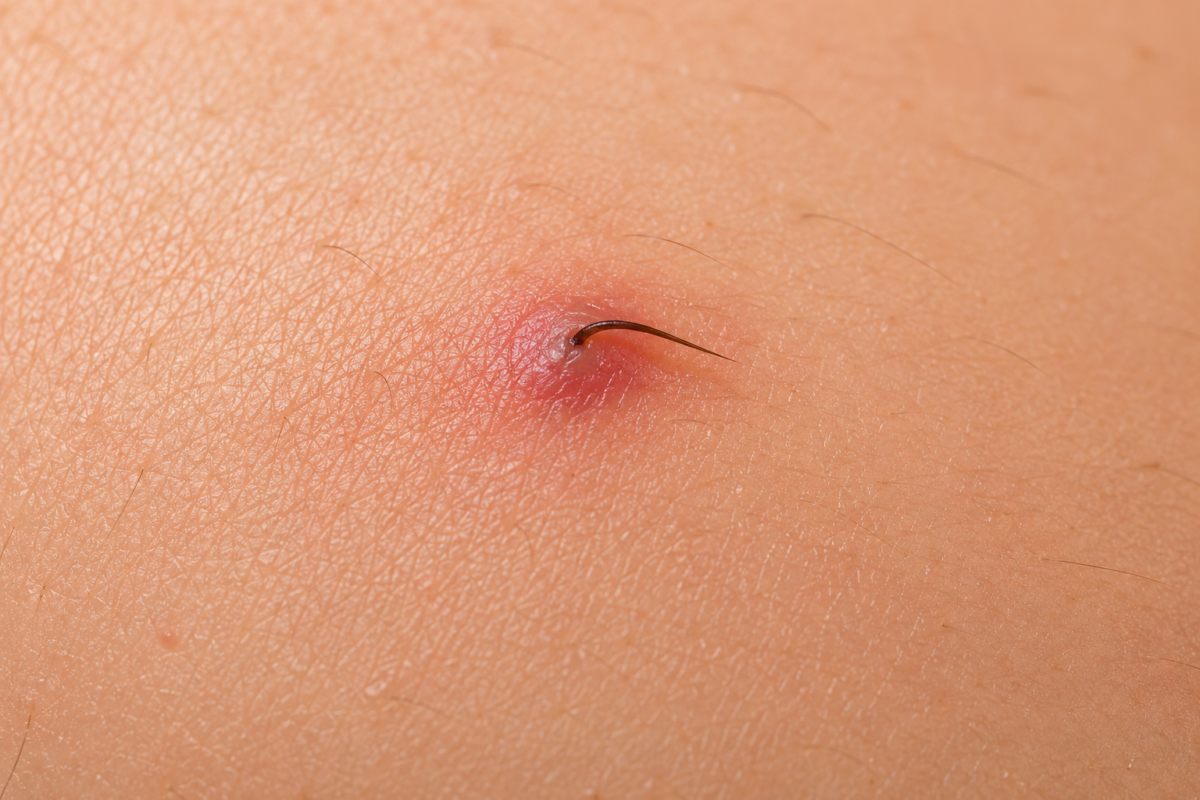
Ingrown hairs are more common in areas where hair is coarse and curly, where skin is prone to rapid keratinization (the build-up of dead skin cells), and where friction occurs regularly. The bikini line, underarms, legs, and face are the most frequently affected areas.
Why Waxing Can Trigger Ingrown Hairs And Why It Doesn’t Have To
Waxing removes hair from the root, which produces a fresh, tapered tip as the hair regrows. Theoretically, this should make ingrown hairs less likely than shaving, which creates a blunt cut edge that is more prone to embedding itself. In practice, however, waxing-related ingrowns are common and the cause is almost always one of the following:
1. Incomplete Hair Removal
When wax is applied against the hair growth direction or removed at the wrong angle, the hair breaks off mid-shaft rather than being removed at the root. The remaining stub, now below the skin surface, is a blunt-ended hair behaving exactly like a shaved hair and it is far more likely to grow sideways than a properly root-extracted hair.
This is the most common cause of ingrown hairs from waxing, and it is almost exclusively a technique problem. At-home waxing kits produce this outcome frequently because the angle and speed of removal are difficult to execute correctly on yourself. Professional waxing service at Alexandre de Paris eliminates this variable entirely.
2. Skipping Exfoliation Before and After Waxing
Dead skin cells accumulate in the follicle opening and on the skin surface between waxing appointments. When a hair regrows after waxing, it must find and penetrate this accumulated layer to emerge. A thick, unexfoliated surface physically blocks the follicle exit and forces the hair to change direction, burying itself in the skin instead.
Light exfoliation 24 hours before your appointment removes the surface build-up that obstructs the wax’s grip on the hair. Gentle exfoliation beginning 48–72 hours after your appointment not before, as immediate post-wax skin needs time to settle keeps the follicle exit clear during regrowth.
3. Tight, Non-Breathable Clothing Immediately After Waxing
Immediately after waxing, the follicle is open and the surrounding skin is temporarily sensitized. Tight synthetic clothing that traps heat and creates friction against freshly waxed skin increases the likelihood of follicle blockage and inflammation during the critical first 24–48 hours. This is particularly relevant for the bikini line and legs.
Loose, breathable cotton for 24–48 hours after waxing is not optional; it is a meaningful variable in your results.
4. Using Moisturizers That Block Follicles
The instinct to moisturise immediately after waxing is understandable, but the product matters enormously. Heavy oils, petroleum-based products, and fragranced lotions applied to freshly waxed skin can block the follicle opening during the window when the skin is most vulnerable. This doesn’t mean you shouldn’t moisturise, it means the product must be lightweight, non-comedogenic, and fragrance-free.
5. Hair Type and Growth Pattern
Clients with naturally curly, coarse hair particularly in the bikini and underarm areas are more prone to ingrown hairs regardless of the waxing technique used. This is a structural characteristic of the hair, not a failure of the service. For these clients, the prevention protocol needs to be more consistent: more frequent exfoliation, appropriate products between appointments, and potentially a modified aftercare routine discussed with your esthetician.
The Professional Fix: What a Trained Esthetician Actually Does Differently
Understanding the cause of ingrown hairs is one thing. Having the problem professionally addressed is another. Here is what changes when you work with an experienced esthetician rather than managing the problem yourself:
Pre-Service Skin Assessment
At Alexandre de Paris, every waxing appointment begins with a brief skin assessment. Your esthetician identifies existing ingrown hairs, areas of follicular congestion, and skin sensitivity before wax is applied. This tells them which technique, wax formulation, and post-service protocol is appropriate for your skin on this visit, on this day. It is not a scripted process; it is a clinical evaluation.
Correct Wax Selection
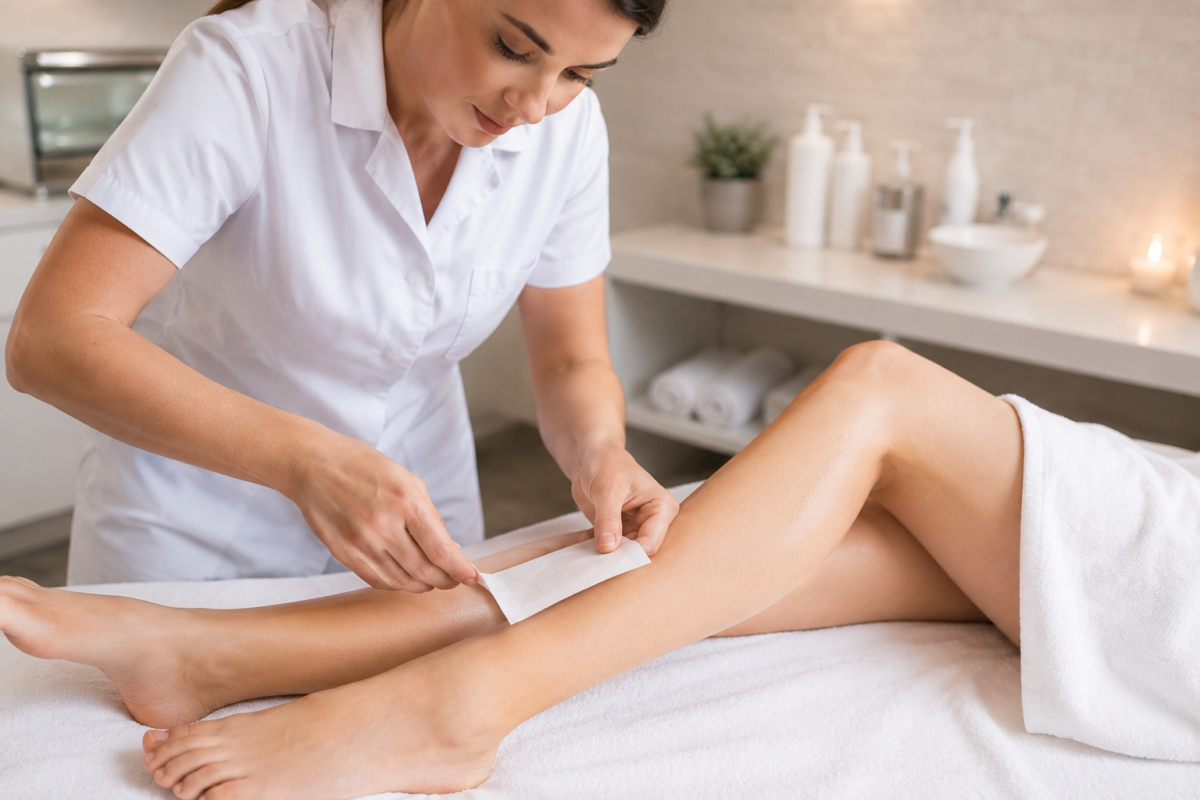
Hard wax and soft (strip) wax are not interchangeable. Hard wax adheres to the hair rather than the skin, making it substantially less traumatic for intimate areas and sensitive skin and it produces cleaner root extractions that significantly reduce the risk of broken-off hairs that become ingrown. Soft wax works efficiently on larger, less sensitive areas like the legs.
At our salon, wax selection is made based on your skin type and the area being treated, not what’s fastest or most convenient. This distinction directly affects your ingrown hair rate.
Extraction of Existing Ingrowns
If you arrive with active ingrown hairs, your esthetician can extract them safely opening the skin surface above the trapped hair with sterile technique and releasing the follicle. This should never be done at home without proper tools and training, as incorrect extraction causes scarring, hyperpigmentation, and infection.
Post-Wax Care Guidance Specific to Your Skin
One-size-fits-all aftercare is not how professional waxing works. After your appointment, your esthetician will tell you exactly what products to use, what to avoid, and how long to wait before resuming exfoliation based on how your skin actually responded during the session, not what the pamphlet says.
Your Between-Appointment Protocol
Here is the specific routine that prevents ingrown hairs between professional waxing appointments:
- Wait 48 hours after waxing before any exfoliation.
- From day 3 onward, use a gentle physical or chemical exfoliant (lactic acid works well for sensitive bikini-line skin) 2–3 times per week.
- Moisturise daily with a lightweight, non-comedogenic product avoid anything with fragrance or petrolatum on freshly waxed areas.
- Wear breathable cotton for at least 48 hours post-wax on bikini and underarm areas.
- Do not attempt to extract ingrown hairs at home; see your esthetician.
- Book your next appointment at 4–6 weeks, not longer. Gaps beyond 6 weeks allow hair to reach a length that makes clean root extraction harder.
For a complete day-by-day guide to the critical 24-hour window after waxing, see our upcoming post: What to Do and Avoid in the 24 Hours After a Wax for Perfect, Smooth Skin. It covers everything from the products to use to the activities to avoid.
When to Seek Additional Treatment
If you are experiencing persistent ingrown hairs despite following a proper protocol, or if you have post-inflammatory hyperpigmentation from previous ingrowns, a combined approach may be appropriate. Our Skin and Body Treatments include targeted body exfoliation and skin treatment services that address follicular congestion and pigmentation alongside your waxing appointments.
Our estheticians can build a combined plan that addresses both the hair removal and the skin health outcome simultaneously.
For a comprehensive overview of why professional waxing consistently produces better skin outcomes than alternatives, Why Waxing Beats Shaving in Fairfax explains the full picture.
Book at Alexandre de Paris
Ingrown hairs are not a reason to give up on waxing they are a reason to work with a professional who knows how to prevent them. At Alexandre de Paris Beauty Salon & Spa, every waxing appointment is structured around your skin’s specific needs. Our estheticians are not just removing hair, they are looking after the skin underneath it.
Book Your Appointment and let’s build an approach to waxing that actually works for your skin.
